
THE COREVITAL JOURNAL
How to Assess Botanical Quality Before You Buy
Learn how to assess botanical quality with practical checks for identity, purity, potency, testing, and transparent labeling before you buy supplements.
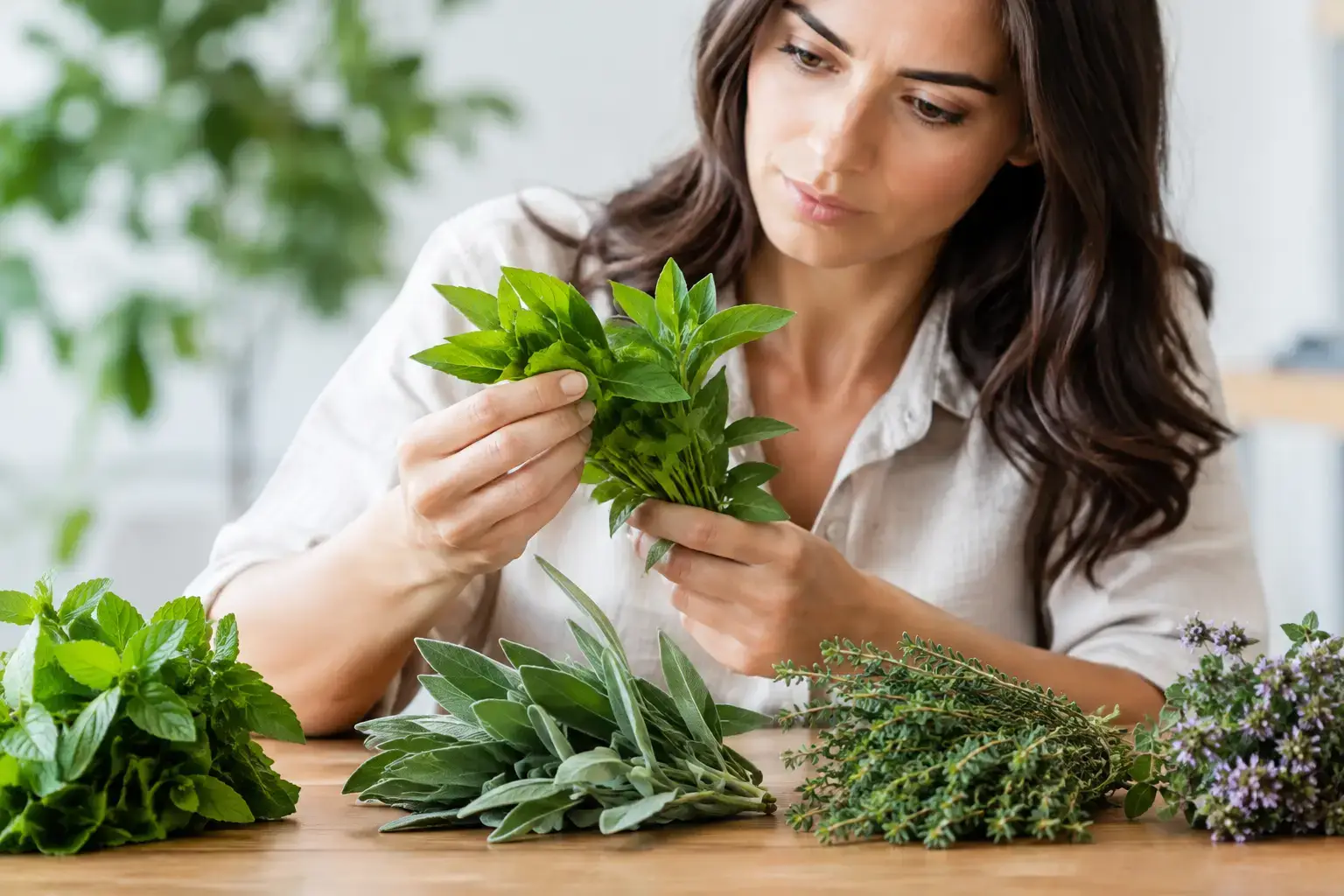
A botanical supplement can look polished on a shelf and still leave the most meaningful questions unanswered. What plant is actually in the bottle? Which part was used? How was it tested? And does the label give you enough information to make a considered choice?
Learning how to assess botanical quality is less about becoming a laboratory scientist and more about knowing what responsible companies should be willing to show. A quality botanical is not defined by a dramatic promise or an exotic-sounding ingredient. It is defined by identity, purity, consistency, and honest communication about what the ingredient can and cannot do.
Start with botanical identity
A plant name alone is rarely enough. Many common names can refer to different species, and different parts of the same plant may have very different chemical profiles and traditional uses.
A clear label should identify the botanical by its common name and, ideally, its Latin binomial name. For example, “cinnamon” is broad. Ceylon cinnamon, Cinnamomum verum, differs from cassia cinnamon, which is more common in many grocery products. Neither name is automatically a verdict on quality, but naming the species tells you the company knows which raw material it intended to source.
The plant part matters, too. Root, leaf, seed, fruit, bark, flower, and resin can each contain different compounds. Ginger root extract and ginger leaf extract are not interchangeable simply because they come from the same plant. When a product does not specify the plant part, you have less context for evaluating whether its ingredient description aligns with the available research and its stated purpose.
For compounds that are not whole-plant botanicals, look for equally specific language. Berberine HCl, for instance, identifies a defined compound form. That clarity is useful. It allows consumers and healthcare professionals to compare the ingredient with the form used in published research more responsibly.
Look for a complete, readable label
Transparency is not a design preference. It is a quality signal.
The Supplement Facts panel should state the amount of each active ingredient per serving. Avoid treating a long ingredient list as proof of a thoughtful formula. What matters is whether the amounts are disclosed and whether the formula makes sense as a whole.
Proprietary blends make that assessment harder. A blend may list several botanicals with one combined total, leaving you unable to see how much of each ingredient is present. That does not prove a product is ineffective, but it asks for more trust than a fully disclosed formula requires.
A readable label should also identify the dosage form and other ingredients. Capsules, tablets, powders, liquids, and gummies each involve different formulation choices. Excipients are not automatically a concern, but they should be named plainly. A company that is careful with its active ingredients should be equally comfortable explaining what else is in the product and why.
Potency is more than a large number
Botanical marketing often turns potency into a contest. Higher milligrams, stronger ratios, and larger percentages can sound persuasive. But these figures only mean something when paired with context.
An extract ratio, such as 10:1, describes the relationship between starting plant material and finished extract. It does not, by itself, tell you how much of a relevant plant constituent is present or whether the extract is better than another form. Extraction methods, source material, moisture content, and processing all affect the finished ingredient.
Standardization can be more informative when it identifies a relevant marker compound. A ginger extract standardized to a stated gingerol content, for example, offers a clearer picture of consistency than an extract ratio alone. Still, a standardized percentage is not a guarantee of superior results. Some plants are understood through a wider range of naturally occurring compounds, and research may use preparations that do not map neatly onto one marker.
The right question is not “Is this the strongest extract?” Ask whether the company explains what the ingredient is, how it is characterized, and why that form was chosen. Proof, not placeholders.
Ask how purity is verified
Plants are grown in soil, harvested in varied conditions, transported across borders, and processed before they reach a finished supplement. Every step creates an opportunity for variation. Quality control exists to identify and manage those risks.
Responsible botanical testing may address identity and potency as well as contaminants such as heavy metals, microbial contamination, pesticides, residual solvents, and adulterants. The exact testing plan depends on the plant, its country of origin, how it is extracted, and the final dosage form. There is no single test that answers every quality question.
A company does not need to publish pages of technical laboratory documentation for every customer. It should, however, be able to describe its standards in plain language and provide meaningful answers when asked. “Third-party tested” can be a helpful starting point, but it is not a complete explanation. Consider asking what is tested, whether testing occurs on raw materials and finished batches, and whether the company verifies ingredient identity rather than testing only for a short list of contaminants.
A certificate of analysis can also be useful, but read it with care. A document is only as informative as the batch, methods, specifications, and results it represents. An undated generic certificate does not provide the same assurance as batch-specific quality documentation tied to the product in hand.
Manufacturing standards matter after sourcing
Excellent raw materials can be compromised by poor manufacturing. This is why facility standards matter alongside ingredient sourcing.
For supplements sold in the United States, current Good Manufacturing Practices, commonly called cGMPs, set expectations for how products are produced, packaged, labeled, and controlled. Manufacturing in a GMP-certified facility is a meaningful quality practice, though it should not be used as a substitute for full ingredient transparency or sensible formulation.
Look for companies that speak plainly about where their products are made and how they approach batch consistency. A US-made label is not, on its own, a guarantee that every botanical was grown in the United States. Many botanicals are responsibly sourced from the regions where they have long been cultivated. The more relevant question is whether the company has traceable sourcing and appropriate verification from incoming ingredient to finished bottle.
Watch for claims that outrun the evidence
A label can be technically detailed and still make promises no supplement can honestly support. This is where quality becomes a matter of judgment, not just paperwork.
Be cautious when a product claims to cure, treat, prevent, or reverse a disease. Supplements may support general wellness in appropriate contexts, but they are not a replacement for medical evaluation or prescribed treatment. Be equally skeptical of claims that imply effortless, guaranteed change: rapid weight loss, instant metabolic repair, or dramatic energy without trade-offs.
Botanicals can be valuable tools, but they are not interchangeable with sleep, nourishing meals, movement, stress support, or medical care. Their effects can also vary by dose, health status, medications, and the rest of a person’s routine. A company that acknowledges those limits is not weakening its product story. It is earning trust in public.
When extra caution is appropriate
Some botanical ingredients can interact with medications or may not be appropriate during pregnancy, breastfeeding, before surgery, or with certain health conditions. If you use prescription medication, manage blood sugar, have liver or kidney concerns, or are considering a supplement for a child, talk with a qualified healthcare professional before beginning it.
This is especially relevant for multi-ingredient formulas. Combining botanicals can be purposeful, but it also makes individual tolerance and interaction considerations more complex. Start with the labeled serving guidance unless your clinician recommends otherwise, and pay attention to how you feel over time.
A practical way to assess botanical quality
Before buying, pause long enough to answer a few grounded questions. Can you identify the species or precise ingredient form? Does the label disclose each amount? Does the company explain testing and manufacturing standards without hiding behind vague language? Are its claims measured and consistent with the evidence?
If the answer is mostly no, the product may still be popular, beautifully packaged, or heavily promoted. Popularity is not a quality-control system.
At CoreVital, we believe botanical education should make choices clearer, not more intimidating. The goal is not to chase a perfect supplement or to expect one bottle to solve a complex health picture. It is to choose tools with care, use them consistently when appropriate, and build the daily practices that help restore your rhythm.
The best quality check may be the simplest: choose the company that gives you enough information to think for yourself. That is where a steadier wellness routine begins.