
THE COREVITAL JOURNAL
A Botanical Supplement Quality Review That Counts
Use this botanical supplement quality review to assess identity, dosing, testing, manufacturing, and claims before a product earns your trust each day.
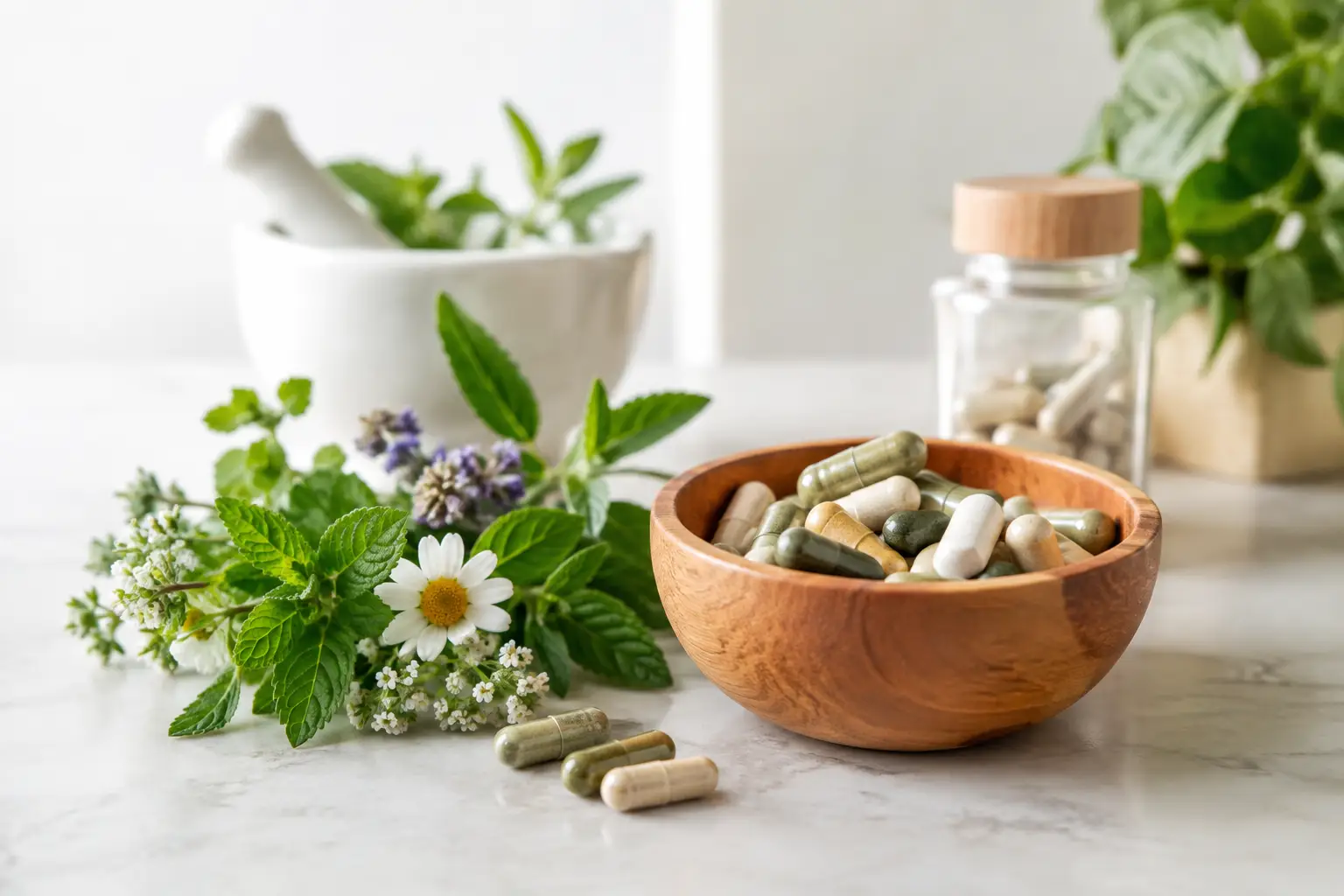
A bottle can look polished and still leave the most meaningful questions unanswered. A proper botanical supplement quality review asks what is in the formula, how much is present, how it was made, and whether the claims stay within the evidence. Those questions matter more than a dramatic label, a trending ingredient, or a promise of faster results.
For people building metabolic wellness through ordinary daily choices, quality is not a luxury feature. It is the baseline. A supplement should be clear enough to evaluate and modest enough to fit within a larger practice of meals, movement, sleep, stress care, and appropriate medical guidance.
What a Botanical Supplement Quality Review Should Examine
Quality begins before a capsule is manufactured. Botanical ingredients vary by plant species, plant part, growing conditions, extraction method, and handling. Two products can list what appears to be the same herb while delivering meaningfully different materials.
Start with identity. A trustworthy label should name the botanical clearly, ideally including the common name and the part used, such as root, seed, leaf, bark, or fruit. That distinction is not academic. The compounds naturally found in ginger root are not necessarily the same as those found elsewhere in the plant. Cinnamon also requires specificity: Ceylon cinnamon and cassia cinnamon are different materials with different naturally occurring constituent profiles.
Then look at the form. Is the ingredient a whole powder, an extract, or an isolated compound? None is automatically superior. A whole botanical may preserve a broader natural profile, while an extract may provide a more consistent concentration of selected constituents. The useful question is whether the chosen form matches the formula's intended role and is disclosed plainly.
A quality review should also consider the supplier's controls. Reputable manufacturing depends on documented raw-material specifications, identity verification, and testing plans designed for the risks associated with each ingredient. Botanicals can be affected by adulteration, heavy metals, pesticides, microbial contamination, or substitution with a less costly plant. “Natural” does not remove those risks. Verification does.
The Label Should Give You Enough Information
A supplement facts panel is not just a legal requirement. It is the clearest public record of what a company is willing to stand behind.
Look for the amount of each ingredient per serving. If a formula uses berberine HCl, milk thistle extract, ginger extract, black seed extract, or cinnamon, the label should state the dose of each one rather than hiding them inside a proprietary blend. A blend may sound sophisticated, but it prevents a customer and their clinician from evaluating the amount of each ingredient or comparing it with available research.
Standardization can be useful when it is relevant. It indicates that an extract is made to contain a defined level of a particular marker compound. But it should not be treated as a universal seal of superiority. A standardization statement only has meaning when the company explains what it measures, why that marker matters, and how the extract is used in the formula.
The rest of the label deserves the same attention. Review the suggested use, other ingredients, allergen statements, and warnings. If a product makes it difficult to find those details, that is information in itself. Trust should be earned in public, not held behind vague language or customer-service scripts.
Dose Is Not the Same as Proof
A familiar ingredient is not a guarantee of a meaningful product. Evidence may exist for a botanical in a specific preparation, at a particular dose, over a defined time period, and in a certain population. That does not mean every product containing that plant will produce the same result.
This is where responsible brands resist the urge to overstate. Research on botanicals can be promising while still limited by study size, duration, formulation differences, or participant characteristics. Human evidence is generally more informative than laboratory or animal findings, but even human trials should be read with context.
Be cautious when a product claims to “balance blood sugar,” “detox the liver,” or “melt fat” without explaining what those phrases mean. These statements often compress complicated physiology into marketing shorthand. For adults managing diabetes, liver disease, digestive conditions, or medications that affect glucose, a supplement decision belongs in a conversation with a qualified clinician.
Manufacturing Is Part of the Formula
Good ingredients can be undermined by careless manufacturing. That is why a botanical supplement quality review should ask where and under what standards a product is made.
Manufacturing in a facility that follows current Good Manufacturing Practices, or cGMPs, is a meaningful starting point. These standards address procedures for receiving materials, maintaining equipment, documenting batches, training personnel, and controlling production. They do not make a product medically proven, but they help establish that quality is managed as a process rather than inspected only at the finish line.
Testing matters at more than one stage. Raw ingredients may need identity confirmation and contaminant screening before they enter production. Finished products may be tested to verify that the formula matches the label and remains within applicable quality specifications. The right testing approach depends on the ingredient and dosage form, which is why broad claims like “lab tested” are less useful than a clear description of what was tested and why.
Transparency has limits. A company does not need to publish every supplier contract or internal procedure. But it should be able to explain its manufacturing standards, disclose its ingredient amounts, and answer reasonable questions without becoming defensive. “Only when verified” is a better operating principle than “trust us.”
Watch for Claims That Outrun the Product
The supplement category often sells urgency: a body problem, a single bottle, a deadline. That framing can make a carefully made product harder to recognize because the loudest claims command attention first.
A quality botanical formula should not require fear, false scarcity, or stimulant-driven energy promises to seem valuable. If a product promises dramatic weight change without addressing food patterns, activity, sleep, stress, or medical context, the claim deserves scrutiny. Metabolic wellness is influenced by many systems and many daily behaviors. A supplement may support a routine, but it cannot replace one.
Pay attention to whether the company distinguishes support from treatment. Language such as “supports healthy glucose metabolism” or “supports digestive wellness” is appropriately different from a promise to treat disease. The distinction is not a loophole. It is a boundary that respects both the limits of supplements and the complexity of individual health.
A More Useful Standard for Daily Use
The best product is not always the one with the longest ingredient list. More botanicals can create more opportunities for interactions, tolerability concerns, and unclear formula logic. A shorter formula with disclosed roles may be easier to assess and easier to use consistently.
Consider whether the product fits your real morning or evening. Does the serving size feel manageable? Are instructions clear? Does the brand offer practical education rather than pressure? For someone with a demanding schedule, consistency usually comes from reducing friction, not from making wellness another performance test.
At CoreVital Nutraceuticals, this principle is reflected in physician-guided, non-stimulant botanical education that treats a formula as one part of a wider rhythm. Proof, not placeholders, means being clear about ingredient roles, evidence limits, and the daily practices that still matter when the bottle is closed.
Before starting a new botanical supplement, especially if you are pregnant, nursing, preparing for surgery, managing a health condition, or taking prescription medication, speak with your physician or pharmacist. Botanicals can have real biological activity. That is a reason for respect, not alarm.
A quality review is ultimately a way to slow down. Read the panel. Ask what is known, what is not known, and whether the product supports the kind of steady practice you can sustain. The right supplement should leave you with more clarity, not more pressure to become someone else by next week.