
THE COREVITAL JOURNAL
Whole Herb Versus Standardized Extracts Compared
Whole herb versus standardized extract is not a contest. Learn how botanical form, dose, testing, and your health needs shape a responsible choice for you.
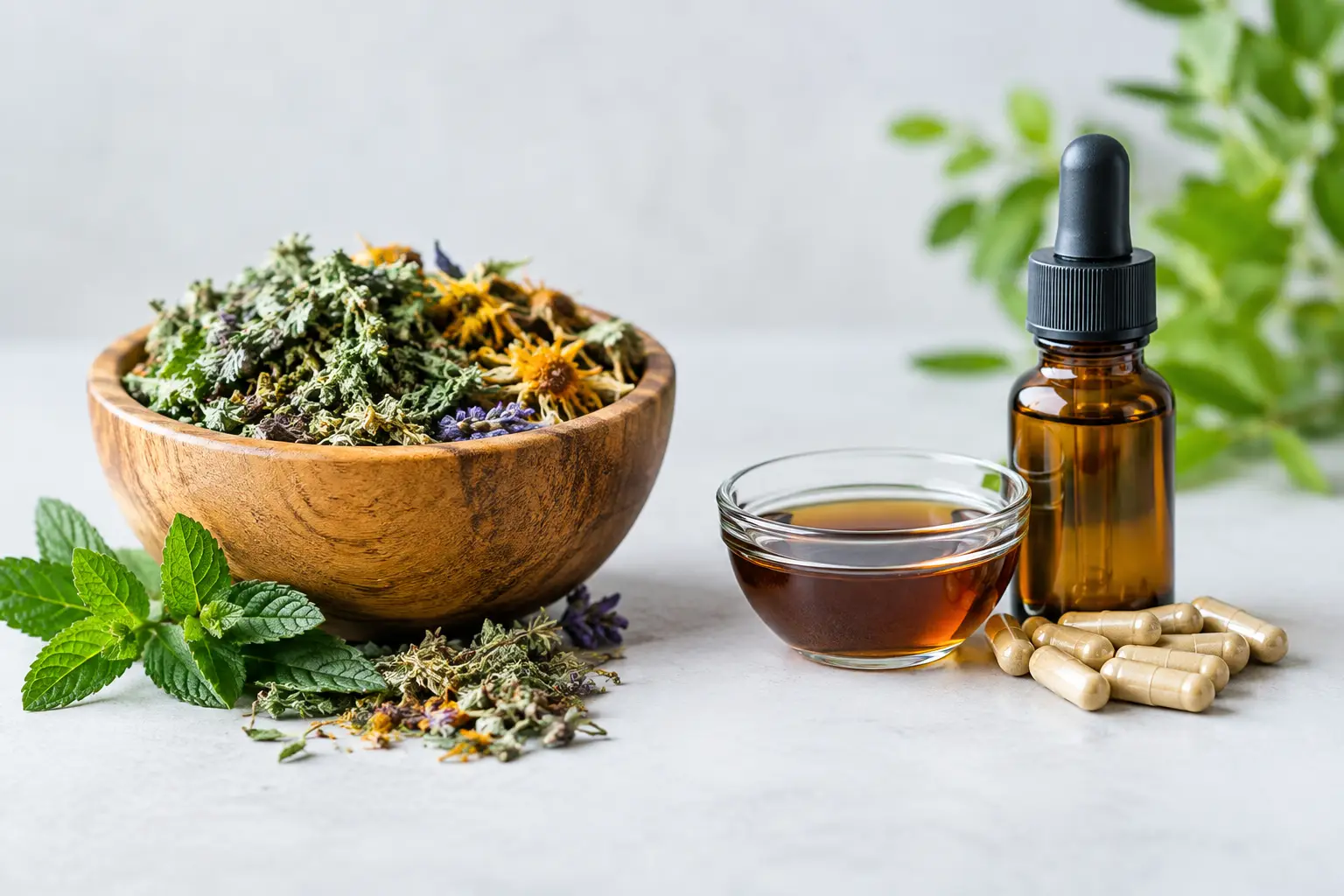
A cinnamon capsule can contain powdered bark. It can also contain an extract calibrated to a specific marker compound. Both may accurately carry the name “cinnamon,” yet they are not interchangeable. That is the real question behind whole herb versus standardized extract: not which format is universally better, but what form best fits the intended role, dose, evidence, and person using it.
Supplement marketing often turns this into a purity contest. Whole herbs are presented as more natural; standardized extracts are presented as more scientific. Neither shortcut is enough. Trust should be earned in public - through clear labeling, appropriate testing, realistic claims, and an honest explanation of what a botanical product can and cannot do.
Whole herb versus standardized extract: the practical difference
A whole-herb product generally uses the plant in a less concentrated form. Depending on the botanical, that may mean dried and powdered root, leaf, seed, bark, fruit, or an herb prepared in a traditional form. The material contains a broad range of naturally occurring plant constituents, including some that researchers have studied closely and others that are less understood.
A standardized extract begins with plant material but uses a process, often involving water, alcohol, or another solvent, to draw out selected constituents. The manufacturer then aims to provide a consistent amount of one or more measured compounds in each serving. For example, an extract might be standardized to a defined percentage of a naturally occurring polyphenol, alkaloid, or other marker.
Standardization is about consistency, not automatic superiority. It can help ensure that one batch delivers a similar amount of a chosen compound as the next. That matters when clinical research is tied to a particular extract or dose. But a standardized percentage does not tell the entire story of the plant, the quality of the raw material, or how the finished formula will work for every individual.
What whole-herb preparations can offer
Whole-herb formats may make sense when the traditional use of a plant relies on its broader profile rather than one isolated constituent. Ginger is a useful example. Its naturally occurring compounds are varied, and the form used - fresh, powdered, dried, or extracted - can influence both its chemistry and the amount consumed.
A less concentrated format can also be appropriate when the goal is gentle, daily botanical support rather than delivering a research-specific dose of a single marker compound. For people who value food-based traditions, powdered herbs can feel familiar and straightforward.
Still, “whole” should not be confused with “complete” or “risk-free.” Plant material varies with growing conditions, harvest timing, storage, species, and processing. One batch of powdered herb may differ meaningfully from another. Whole-herb products also require enough material to provide a meaningful serving, which can make capsule size and serving count impractical for some ingredients.
The label should identify the exact plant part and botanical name whenever possible. “Herbal blend” is not a meaningful description of quality. A root, seed, leaf, and fruit from the same plant can have different constituent profiles and different uses.
Why standardized extracts are often used
Standardized extracts are especially useful when a formula is designed around an amount that has been characterized in research. If studies examined a particular constituent or a specific extract preparation, a product should not imply that any powdered version of the plant will offer the same result.
They can also make a formula more practical. Concentration allows a manufacturer to include several botanicals in a reasonable number of capsules without relying on oversized servings. That is one reason multi-ingredient products often use extracts alongside other forms of botanical ingredients.
But standardization has limits. A label stating “10% extract” may sound precise while saying very little. Ten percent of what? Is that compound relevant to the intended use? Was the extract tested in the finished product, or only in the incoming ingredient? Is the stated compound a naturally occurring marker, or was it added after extraction to meet a target?
A responsible label answers more than the minimum. It names the ingredient form, identifies the amount per serving, and avoids hiding doses behind proprietary blends. Proof, not placeholders.
A marker compound is not the whole plant
A marker compound is a measurable constituent used to help identify or standardize an extract. Sometimes it is considered an active constituent. Other times, it is simply a useful quality-control reference point. Those are different things.
The presence of a marker does not prove that an extract will produce a particular wellness outcome. Nor does it mean every other component of the plant is irrelevant. Botanical research is often complex because plants are complex. Their constituents may act together, and the effects observed in a study may depend on the exact preparation, population, dose, and duration.
That nuance is not a weakness. It is the difference between responsible education and a promise that reaches beyond the evidence.
How to read a botanical supplement label
When comparing whole herb versus standardized extract, start with the information the label makes available. You should be able to identify the common name and, ideally, the Latin botanical name. Look for the plant part, such as root or seed, and whether the ingredient is a powder, an extract, or a named compound.
Then look at dose. A large number in milligrams is not automatically more meaningful than a smaller number. Five hundred milligrams of powdered herb and 500 milligrams of a concentrated extract are different materials. An extract ratio, such as 10:1, can offer context, but it is not a universal measure of potency. Ratios can be calculated in different ways and do not replace clear standardization or finished-product testing.
Manufacturing standards matter as much as ingredient language. A carefully selected extract can still fall short if identity, purity, potency, or contaminant controls are weak. Choose brands that are direct about GMP manufacturing, testing practices, and formula amounts. Be cautious when the label relies on vague superlatives, dramatic transformation language, or a proprietary blend that prevents you from seeing individual doses.
The right choice depends on the formula and the person
There are reasonable cases for both forms. A whole herb may be a thoughtful choice for a traditional, broad-spectrum botanical preparation. A standardized extract may be the better fit when consistency and research alignment are central to the formula. Some well-designed products use both, selecting the form that suits each ingredient rather than forcing every plant into the same format.
At CoreVital, that principle guides the conversation around plant-based metabolic wellness: every ingredient should have a disclosed role, and the form should be explainable without inflated claims. A botanical formula does not become more credible because it uses a scientific-sounding extract, nor more wholesome because it uses a powdered herb.
Your health context also matters. Botanical supplements can affect digestion, blood glucose, medication metabolism, and other body systems. Concentrated extracts may be more likely to create meaningful interactions simply because they deliver higher amounts of selected constituents. If you take prescription medications, are pregnant or breastfeeding, have a liver or kidney condition, are preparing for surgery, or are managing a diagnosed health concern, speak with a qualified clinician before starting a new supplement.
For anyone using supplements to support glucose awareness or metabolic routines, that conversation is particularly worthwhile. Supplements are not replacements for prescribed treatment, regular monitoring, nourishing meals, movement, sleep, or follow-up care.
Choose clarity over categories
The better question is rarely, “Is this whole herb or extract?” Ask instead: What exactly is in this product? Why was this form chosen? How much am I taking? What evidence fits this preparation? And does this choice make sense alongside my medications, health history, and daily routine?
Those questions can slow down the buying process. That is a good thing. Lasting wellness is usually built through ordinary, repeatable decisions - a steadier breakfast, a walk after dinner, a clinician conversation, a label read closely enough to understand. Choose the botanical form that supports that rhythm, not the one with the loudest promise.