
THE COREVITAL JOURNAL
Ceylon Cinnamon Versus Cassia Cinnamon Compared
Ceylon cinnamon versus cassia cinnamon: learn how flavor, coumarin, sourcing, and daily use differ so you can choose with clarity in steady daily wellness.
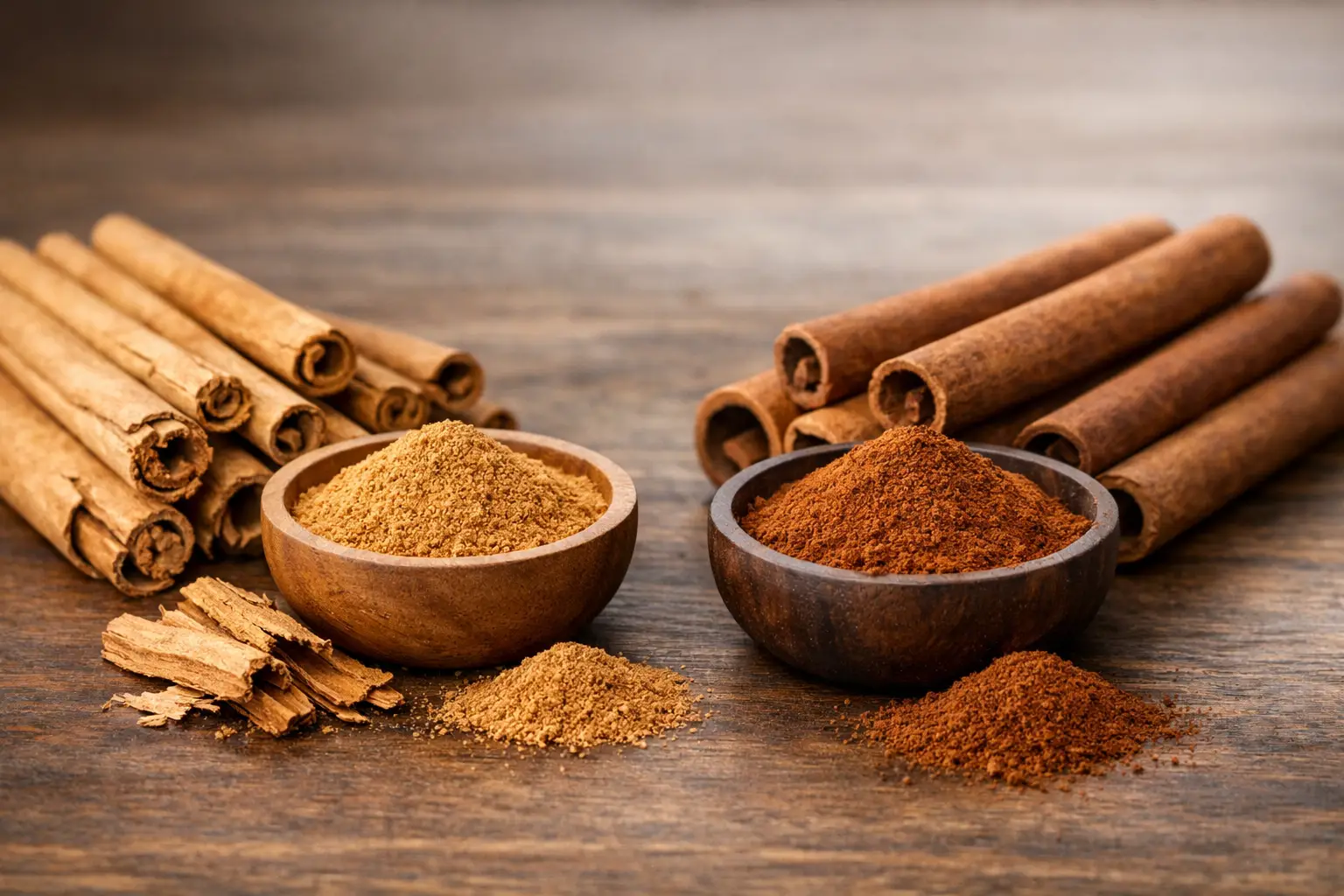
The question of ceylon cinnamon versus cassia cinnamon is not just a matter of taste. The two spices look similar in a jar and may both be labeled simply as cinnamon, yet they differ in botanical source, flavor, coumarin content, and what those differences can mean for frequent use. For anyone building a steady metabolic-wellness routine, clarity matters more than a trendy ingredient callout.
Cinnamon can be a meaningful part of meals, traditions, and thoughtfully designed botanical formulas. It is not a shortcut, a replacement for medical care, or a substitute for the daily foundations that support health: regular meals, movement, sleep, stress support, and appropriate clinical guidance. But understanding which cinnamon you are using is a practical step toward choosing ingredients with intention.
Ceylon Cinnamon Versus Cassia Cinnamon: The Core Difference
Ceylon cinnamon comes from the inner bark of Cinnamomum verum, a tree native to Sri Lanka and cultivated in several tropical regions. It is often called true cinnamon, although cassia is also a genuine cinnamon spice in culinary and commercial use.
Cassia cinnamon is a broader category that commonly includes Cinnamomum cassia, Cinnamomum burmannii, and Cinnamomum loureiroi. Much of the cinnamon sold in conventional US grocery stores is cassia, often Indonesian cassia. It is generally more widely available and less expensive than Ceylon cinnamon.
The most significant practical distinction is coumarin, a naturally occurring plant compound. Cassia varieties tend to contain substantially more coumarin than Ceylon cinnamon. For most people, occasional culinary use of cassia is unlikely to be a concern. The question becomes more relevant when cinnamon is used in concentrated supplements or consumed consistently in larger amounts.
Why Coumarin Deserves a Measured Conversation
Coumarin is not automatically harmful, and its presence does not make cassia a bad spice. Context determines the concern. Higher, repeated exposure may be difficult for some people, particularly those with liver conditions, people using medications that affect the liver or blood clotting, and those taking high-dose cinnamon products over time.
Ceylon cinnamon is generally preferred for regular supplemental use because its coumarin content is typically much lower. That choice reflects an ingredient-selection standard, not fear-based marketing. When a botanical is intended to support a daily routine, it is reasonable to consider not only its potential role but also its suitability for continued use.
There is still variability. Botanical compounds can differ by species, growing conditions, harvest, processing, and testing methods. A responsible company should be cautious about presenting any raw botanical as identical from batch to batch or promising a clinical outcome based on an ingredient name alone. Proof, not placeholders, means acknowledging both what is known and where real-world variation remains.
Cinnamon and Liver Considerations
People with diagnosed liver disease, a history of abnormal liver tests, or medications with known liver-related considerations should speak with their clinician before adding a cinnamon supplement. The same applies to anyone who is pregnant, breastfeeding, preparing for surgery, or managing a complex medication regimen.
This is not an argument against food. It is a reminder that concentrated extracts and daily capsules deserve more care than a sprinkle over oatmeal. Natural does not mean consequence-free, and responsible wellness makes room for that truth.
Flavor, Appearance, and Kitchen Use
Ceylon cinnamon is lighter, more delicate, and gently sweet, with citrusy and floral notes. Its sticks are made of thin, papery layers that curl into a soft, cigar-like shape. They crumble easily and are often tan rather than deep reddish brown.
Cassia has a bolder, warmer flavor that many Americans recognize immediately from cinnamon rolls, holiday baking, and spiced drinks. Cassia sticks are thicker, harder, and typically formed from one curled piece of bark. Its stronger flavor can hold up well in baking and long-simmered recipes.
Neither is universally better in the kitchen. Cassia may be the better fit when you want familiar intensity at a lower cost. Ceylon may suit tea, fruit, lighter desserts, or everyday use when you prefer a more nuanced flavor. The right choice depends on the recipe, the amount used, and whether cinnamon is an occasional culinary accent or part of a more consistent routine.
What Cinnamon Can and Cannot Support
Cinnamon is often discussed in relation to glucose metabolism. Research has explored how cinnamon preparations may support healthy blood-sugar management in some contexts, but the findings are mixed. Studies use different species, preparations, doses, durations, and participant groups, which makes broad claims unreliable.
That does not mean cinnamon has no place in a wellness routine. It means the claims should remain proportional to the evidence. A cinnamon ingredient may be used to support healthy metabolic processes as part of an overall lifestyle, but it should not be presented as a treatment for diabetes, insulin resistance, or any other medical condition.
If you take glucose-lowering medication or use insulin, avoid making supplement changes casually. Even a product with a plant-based ingredient profile can affect the broader picture of your care. A physician or qualified clinician can help you account for medications, lab values, food patterns, and individual health history.
How to Read a Cinnamon Supplement Label
A label that says only cinnamon leaves too many questions unanswered. If cinnamon is central to a formula, look for the botanical identity. Cinnamomum verum indicates Ceylon cinnamon. A label that identifies cassia or does not specify a species may warrant a closer look, especially for a product intended for daily use.
Also consider the form. Is it whole-bark powder, an extract, or a standardized ingredient? These are not interchangeable. An extract may concentrate certain compounds, while a powder preserves a broader mix of naturally occurring constituents. Neither format is automatically superior. What matters is whether the form, amount, quality testing, and intended role are clearly disclosed.
Manufacturing standards matter, too. A transparent supplement company should identify its ingredients, avoid proprietary-blend ambiguity, and manufacture under appropriate quality controls. GMP-certified manufacturing does not prove that a product will create a specific result, but it is an important part of responsible production.
At CoreVital, ingredient education starts with a simple principle: a formula should be clear enough for a customer to understand why each component is there. Ceylon cinnamon is selected with daily-use considerations in mind, alongside a physician-guided approach to botanical formulation. It is one tool, not the entire plan.
Choosing Between Ceylon and Cassia
For ordinary cooking, either cinnamon can have a place. Use the flavor you enjoy, and do not turn a familiar pantry spice into a source of unnecessary anxiety. If you use cinnamon frequently, make it part of a concentrated supplement routine, or have a health context that makes coumarin exposure more relevant, Ceylon cinnamon is often the more considered option.
The most useful question is not which cinnamon is perfect. It is whether the ingredient choice matches the way you actually plan to use it. A reliable wellness practice is built less on dramatic swaps and more on small decisions repeated with care. Let your cinnamon be one of them.