
THE COREVITAL JOURNAL
Berberine Phytosome Versus HCl: What Matters Most
Berberine phytosome versus HCl: compare absorption, research, dosing, cost, and safety so you can choose a transparent metabolic wellness formula wisely.
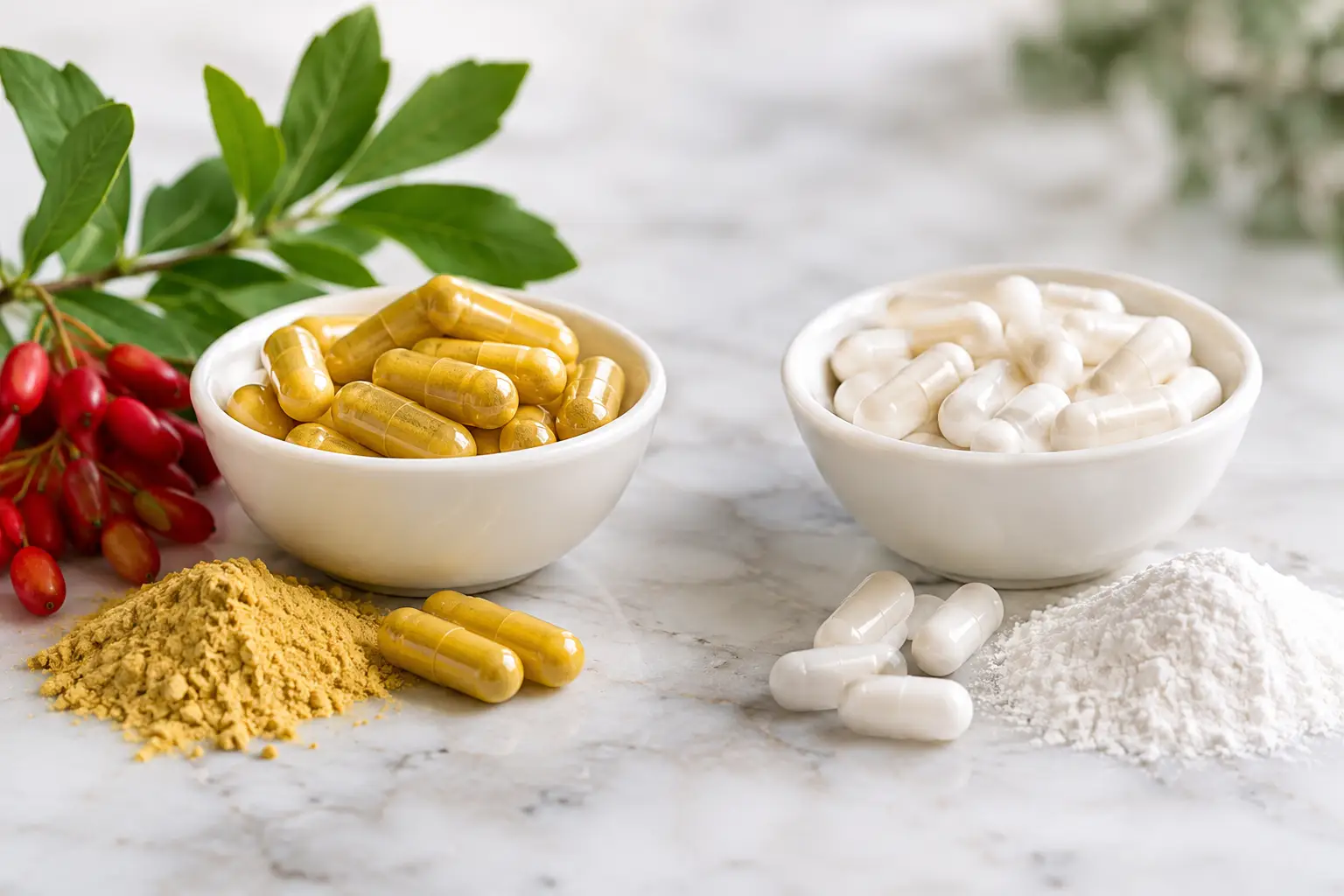
A capsule labeled “enhanced absorption” can sound like an obvious upgrade. But when comparing berberine phytosome versus HCl, the more useful question is not which form has the more impressive label. It is whether the formula discloses what it contains, uses an amount supported by relevant research, and fits your health needs and daily routine.
Berberine is a plant-derived compound found in botanicals such as barberry, goldenseal, and Oregon grape. It has drawn sustained interest for its role in glucose metabolism, lipid metabolism, digestion, and broader cardiometabolic wellness. Interest is not the same as certainty, however. Berberine is not a substitute for medical care, prescription treatment, meals that support steady energy, movement, or sleep.
The form can matter. So can the dose, the companion ingredients, your medication list, and whether you can take the product consistently. Proof, not placeholders, starts with understanding what a label is actually telling you.
Berberine phytosome versus HCl: the basic difference
Berberine HCl is berberine combined with hydrochloride to form a stable salt. It is the familiar form used in a substantial portion of human berberine research and in many standard supplements. When a Supplement Facts panel says “berberine hydrochloride” or “berberine HCl,” the listed milligrams generally refer to that ingredient form, not necessarily to pure berberine alone.
A phytosome is a delivery system in which a botanical compound or extract is associated with phospholipids, often phosphatidylcholine. The intent is to help the compound interact differently with digestive and cellular membranes, potentially improving absorption. A berberine phytosome may therefore provide less raw material by weight than a conventional HCl product while aiming for comparable or improved exposure in the body.
That distinction is meaningful, but it does not make “phytosome” a universal verdict on quality. The specific phospholipid complex, the source material, the amount of berberine it supplies, the manufacturing process, and the evidence behind that exact finished ingredient all matter. Two products using the word phytosome may not perform alike.
Why absorption is only one part of the decision
Conventional berberine has relatively low oral bioavailability. This is one reason supplement companies explore delivery technologies. A phytosome may be a reasonable response to that limitation, especially for someone who prefers fewer capsules or experiences digestive discomfort with a higher conventional dose.
Still, better absorption on paper is not automatically better real-world results. The body does not respond to a single number. An enhanced-delivery ingredient needs evidence showing that its higher exposure is consistent, tolerable, and relevant to the wellness outcome being discussed. A laboratory measure of absorption, or even a small pharmacokinetic study, cannot replace well-designed human outcome research.
This is where direct comparisons are often thinner than marketing suggests. Much of the established body of research around berberine has used conventional forms, commonly berberine HCl. Evidence on phytosome-based products is growing, but studies may involve different doses, populations, durations, and proprietary delivery systems. It is not scientifically clean to assume that 250 mg of any phytosome is equivalent to 500 mg of any HCl product.
A responsible manufacturer should say what it knows and avoid filling the gaps with promises. “May support” is not evasive language when the evidence has limits. It is the honest boundary between ingredient education and a treatment claim.
What the research context favors
If your priority is choosing the form with the longest track record in human supplement research, berberine HCl has a practical advantage. It is widely available, familiar to clinicians who discuss supplements, and commonly used in studies examining metabolic markers. That does not mean every HCl product is well made. It means the form is easier to place in the existing research context.
If your priority is a specialized delivery approach, a phytosome can be worth considering when the manufacturer identifies the exact ingredient and provides credible human data for that formulation. The standard should be specific: What was tested? At what daily amount? For how long? In whom? Were outcomes clinically meaningful, and were adverse effects reported?
Be cautious with claims that a delivery technology “solves” all of berberine’s limitations. Absorption is one factor. Food intake, digestive tolerance, individual metabolism, product quality, and adherence also shape the experience. A formula that fits your routine and that you tolerate well may be more useful than a technically sophisticated option you stop taking after a week.
Read the label before comparing milligrams
The most common comparison mistake is treating all listed milligrams as interchangeable. They are not. With a phytosome, the listed amount may refer to the full phospholipid complex, while the actual amount of berberine within that complex is lower. With HCl, the label may list the salt weight. Neither approach is inherently misleading, provided the company explains it clearly.
Look for the botanical or chemical identity, the ingredient form, and the amount per serving. If a phytosome is used, the label or supporting materials should clarify whether the listed number is the complex weight and, ideally, how much berberine it delivers. You should also be able to see the full formula rather than a proprietary blend that hides ingredient quantities.
Context matters as much as the headline ingredient. Some formulas pair berberine with botanicals selected for digestive, liver, or metabolic wellness support. That can be thoughtful, but it also makes it harder to attribute an effect to berberine alone. CoreVital’s forthcoming Burn, for example, uses disclosed berberine HCl alongside Ceylon cinnamon, milk thistle, ginger extract, and black seed extract rather than presenting one ingredient as a cure-all.
Cost deserves an honest comparison, too. Calculate the price per day at the intended serving, not just the price per bottle. A phytosome may cost more because of a branded delivery ingredient or more complex manufacturing. That premium may be reasonable if the formulation is transparent and supported, but price alone does not establish better absorption or better outcomes.
Tolerability, medications, and who should pause
Digestive effects are among the most commonly reported concerns with berberine supplements. Some people experience nausea, constipation, loose stools, cramping, or changes in appetite. A lower starting amount, taking it with food when the label permits, or changing the timing may improve tolerance for some people. Persistent or significant symptoms are a reason to stop and consult a clinician.
Neither HCl nor a phytosome should be treated as automatically safer. A delivery system that changes exposure may also change how a person responds. More absorbed compound is not always the goal, particularly when someone uses medications or has a complex health history.
Speak with a physician or pharmacist before using berberine if you take medication for blood glucose, blood pressure, cholesterol, blood clotting, immune function, or other ongoing conditions. Berberine may affect blood sugar and can interact with medication handling in the body. Extra caution is appropriate for people with diabetes, liver or kidney concerns, and anyone managing multiple prescriptions. Berberine is generally not appropriate during pregnancy or breastfeeding, and it should not be given to infants or young children unless a qualified pediatric clinician specifically directs otherwise.
Choose the form that supports consistency
There is no universal winner in berberine phytosome versus HCl. A transparent HCl formula may be the more grounded choice for someone who values a familiar research base, straightforward labeling, and an accessible price. A well-documented phytosome may suit someone who wants a specialized delivery format and can verify what the product actually provides.
The better choice is rarely the loudest one. It is the one you can understand, discuss openly with your care team when needed, and place within steady practices around meals, sleep, movement, and stress. Restore your rhythm first. A supplement should support that work, never pretend to replace it.