
THE COREVITAL JOURNAL
Walking After Meals for Better Blood Sugar
Walking after meals blood sugar: learn why a short, gentle walk may support glucose awareness, plus a practical routine that fits real daily life well.
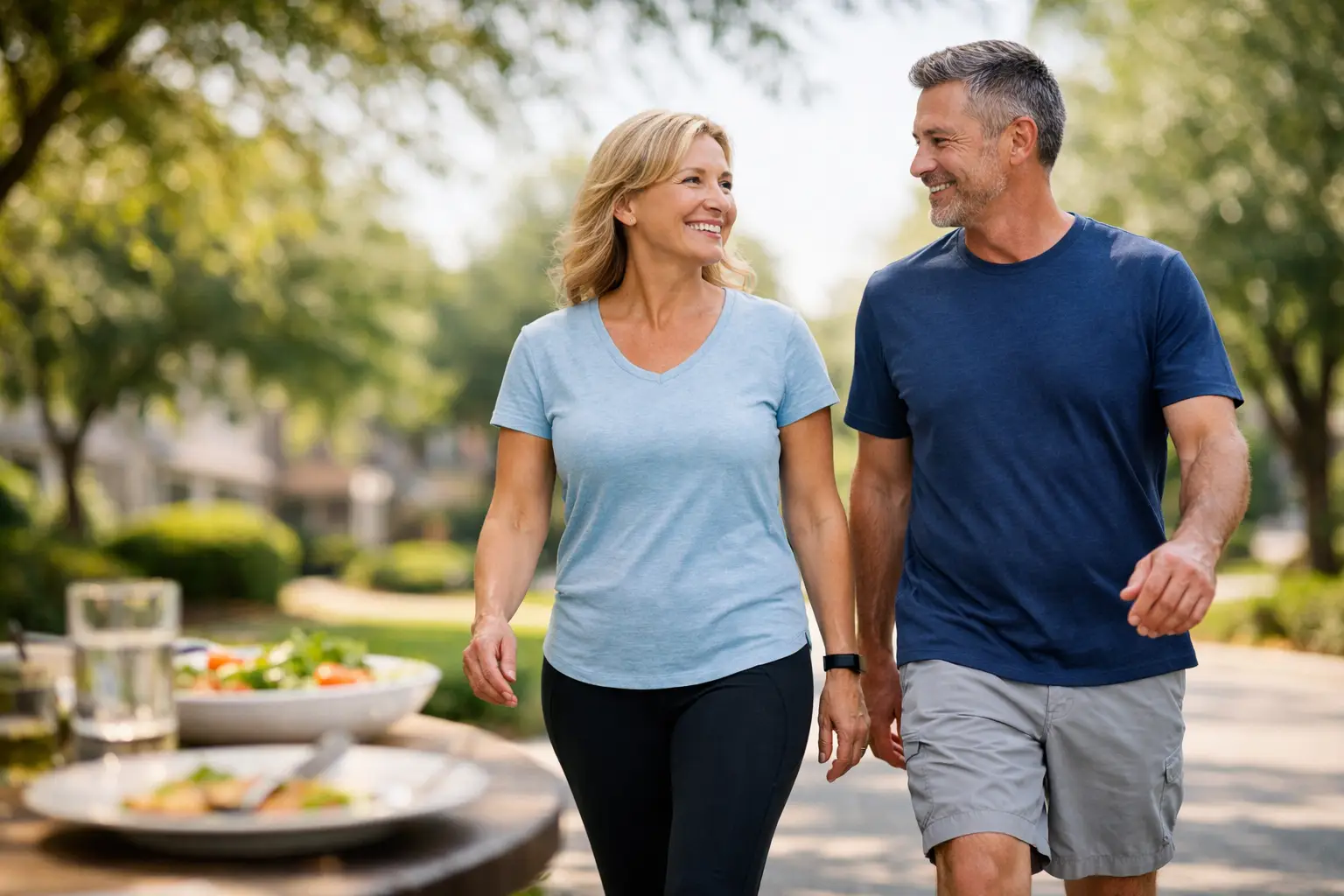
A 10-minute walk after dinner may not look like a metabolic strategy. It looks like putting on comfortable shoes, stepping outside, and giving the day a quieter ending. Yet walking after meals for blood sugar is one of the more practical habits worth discussing because it asks for consistency, not intensity.
For many adults, glucose awareness can become overly complicated: restrictive plans, punishing workouts, and products that promise a dramatic reset. A post-meal walk offers a different starting point. It is a modest practice that may help your body use glucose after eating while supporting digestion, mood, and the habit of regular movement. No hype. No shortcuts. Just a useful action that can fit into ordinary life.
How walking after meals may affect blood sugar
When you eat carbohydrates, your digestive system breaks them down into glucose, which enters the bloodstream. Insulin helps move that glucose into cells, where it can be used or stored. Muscles can also take up glucose when they contract during activity. That is part of why movement after a meal can be helpful.
Research suggests that light-to-moderate activity after eating may reduce the size of post-meal glucose rises for some people, particularly when compared with staying seated. The effect is not identical for everyone. Meal size and composition, sleep, stress, medication use, fitness level, and underlying metabolic health all matter. Still, the basic idea is sound: active muscles have a demand for fuel, and a walk creates that demand.
This does not mean a walk cancels out a meal, prevents diabetes, or replaces a care plan. It is better understood as one supportive behavior within a broader rhythm of meals, movement, sleep, stress management, and appropriate medical care. The value is often in repeating the behavior over months, not chasing a single impressive glucose reading.
Timing matters, but perfection does not
The period after a meal is when blood glucose commonly rises, so walking then may be especially relevant. Many people find that beginning within roughly 15 to 30 minutes of finishing a meal is realistic. Others need to clear dishes, finish a work call, or wait until their stomach feels settled. That is fine.
A walk taken later is still movement. If the choice is between a perfectly timed routine you rarely complete and a dependable walk you take most days, choose dependable. Restore your rhythm before you try to optimize it.
Breakfast, lunch, and dinner can each be useful opportunities. In practice, dinner is often the easiest place to begin because it can replace a long stretch of evening sitting. For someone who works from home, a five- to 10-minute walk after lunch may also create a healthy boundary between eating and returning to a screen.
How long should you walk?
You do not need an hour. Studies examining post-meal activity often use short bouts of movement, and many people can start with 10 minutes. If that feels easy and enjoyable, 15 or 20 minutes may be a natural next step.
Pace matters less than the fact that you are moving. A comfortable pace that raises your breathing slightly but still allows conversation is enough for many people. The goal after a meal is generally not to train at maximum effort. Very hard exercise immediately after a large meal can feel unpleasant and may aggravate reflux or stomach discomfort.
If a continuous glucose monitor is part of your clinician-approved care, you may notice that your response changes from one day to another. Treat that data as information, not a verdict. One reading can reflect meal timing, sensor variation, poor sleep, stress, or factors you cannot see. Look for patterns over time with a qualified healthcare professional rather than trying to engineer every number.
A realistic post-meal walking routine
The best routine is the one that survives a busy Tuesday. Start small enough that it does not require motivation worthy of a major life overhaul. For the next week, choose one meal you eat on most days and pair it with a short walk.
A simple approach can look like this:
- Pick your most repeatable meal, often lunch or dinner.
- Set a modest target of five to 10 minutes after eating.
- Use an existing cue, such as putting your plate in the sink or taking the dog out.
- Keep the route easy: around the block, through the parking lot, or even inside your home.
- Notice how your energy, digestion, and evening routine feel after a week.
Indoor walking counts. A few loops through an office building, light movement while listening to a podcast, or walking in place during a short call can be a practical alternative when weather, safety, or caregiving makes an outdoor walk unrealistic. The body responds to movement, not to whether the movement looks impressive.
It can also help to make the walk social. Invite a partner, call a friend, or bring a child along. For some households, a short walk after dinner becomes less about blood sugar and more about creating a pause before everyone disappears into separate screens. That relational benefit can make the habit easier to sustain.
What to eat still matters
Walking is supportive, not a free pass from the quality of a meal. Meals built around fiber-rich plants, adequate protein, and satisfying fats tend to produce a different glucose response than highly refined carbohydrates eaten alone. A walk may complement that foundation, but it cannot make every meal metabolically identical.
There is no need to turn this into food fear. Context matters. A bowl of pasta after an active day, shared with family and followed by a walk, belongs in a different context than eating quickly at a desk after a night of poor sleep. Metabolic wellness is shaped by patterns, not moral labels attached to individual foods.
Hydration, alcohol intake, and meal portion size may also influence how you feel after eating. If a walk leaves you overly full or uncomfortable, shorten it, slow down, or wait a little longer. A gentle routine should support your day, not become another source of pressure.
When to get personal guidance
If you use insulin or medications that can lower blood glucose, discuss changes in activity with your prescribing clinician. A post-meal walk can affect glucose levels, and your care team can help you understand monitoring, meal timing, and hypoglycemia precautions that fit your situation.
It is also wise to seek individualized guidance if you have diabetes complications, cardiovascular symptoms, severe neuropathy, balance concerns, chronic pain, or a history of disordered eating. Stop and seek medical attention for chest pain, fainting, severe shortness of breath, or other concerning symptoms during activity.
Supplements may have a role in a physician-guided wellness plan, but they should not be positioned as substitutes for prescribed treatment, regular movement, or meals that support your needs. Trust should be earned in public: through clear ingredient education, realistic claims, and respect for the limits of any single tool.
A short walk may never become the most dramatic part of your wellness routine. That is precisely its strength. Let it be ordinary, repeatable, and yours: a few minutes after a meal to move your body, clear your mind, and practice the kind of consistency that compounds quietly.