
THE COREVITAL JOURNAL
What are the other ingredients in a berberine capsule?
Two bottles can list the same amount of berberine and use different capsule shells. See where to find the shell, compare labels and ask about gelatin.
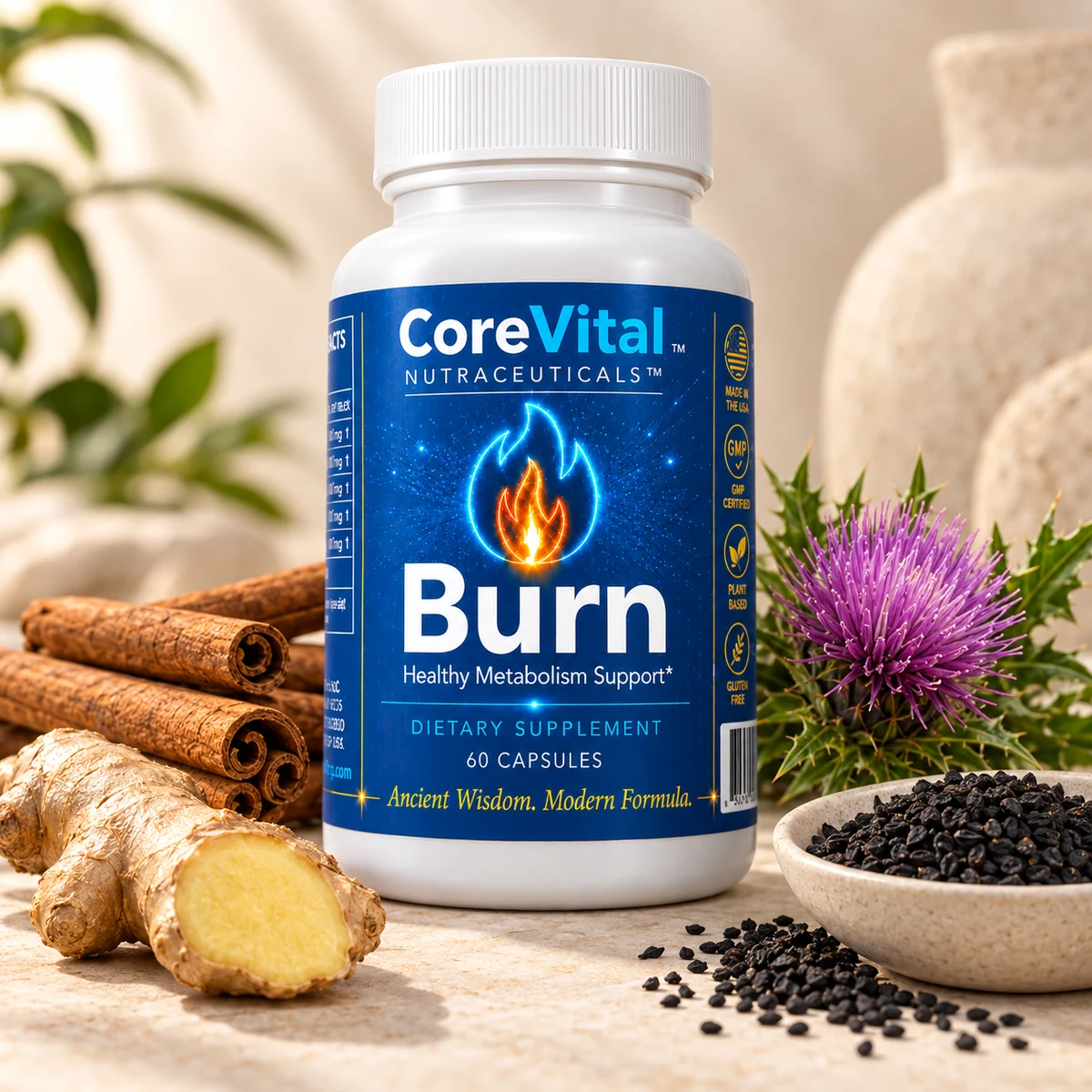
If you want to know how much berberine you’re buying, read the Supplement Facts panel. If you want to know what the capsule is made of, look just below or beside that panel for “Other Ingredients.” On CoreVital Burn, that line lists hypromellose (capsule) and microcrystalline cellulose. The word in parentheses identifies the shell.
Where does the shell show up in the serving math?
Burn lists 500 mg of berberine HCl per two-capsule serving. Its five botanical amounts add up to 1,150 mg per serving. Neither number includes the weight of the capsule shell. Microcrystalline cellulose appears on the separate ingredient line without an amount. If you weigh two unopened capsules on a scale, you can’t use their total weight to check the 500 mg berberine claim.
Two bottles, one shopper looking to avoid gelatin
Imagine two bottles that each list 500 mg of berberine HCl per serving. Bottle A says “gelatin (capsule).” Bottle B says “hypromellose (capsule), microcrystalline cellulose.” Both labels answer the berberine question. Only A names gelatin as the shell material. B identifies a cellulose-based shell. The second cellulose entry is a separate ingredient, so recording both entries as shell materials would misread the label.
Now imagine the online listing shows only the front of bottle B. A photo of a clear capsule doesn’t settle the question. Find a readable back-label photo for that exact product and bottle size. If halal, kosher or vegan certification matters to your purchase, ask for the current certification covering the finished product. A shell ingredient alone does not establish that certification.
What to write down before checkout
- Copy the serving size and the amount of the named berberine form per serving.
- Copy the full Other Ingredients line, including the parenthetical description of the shell.
- Flag the detail that would change your decision. A useful question is “What material is the shell on this exact bottle, and can you send the current back-label image?”
See the Burn label and ingredient breakdown, or use the side-by-side worksheet to compare your two bottles. If you are considering taking both, check whether the two labels list the same berberine first. For background on where to find these details, see the FDA guide to ingredient labeling and the NIH guide to supplement labels.