THE COREVITAL JOURNAL
Milk Thistle Liver Support Evidence That Holds Up
Milk thistle liver support evidence is promising in specific settings, but no cure. See what studies show, where limits remain, and how to use it wisely.
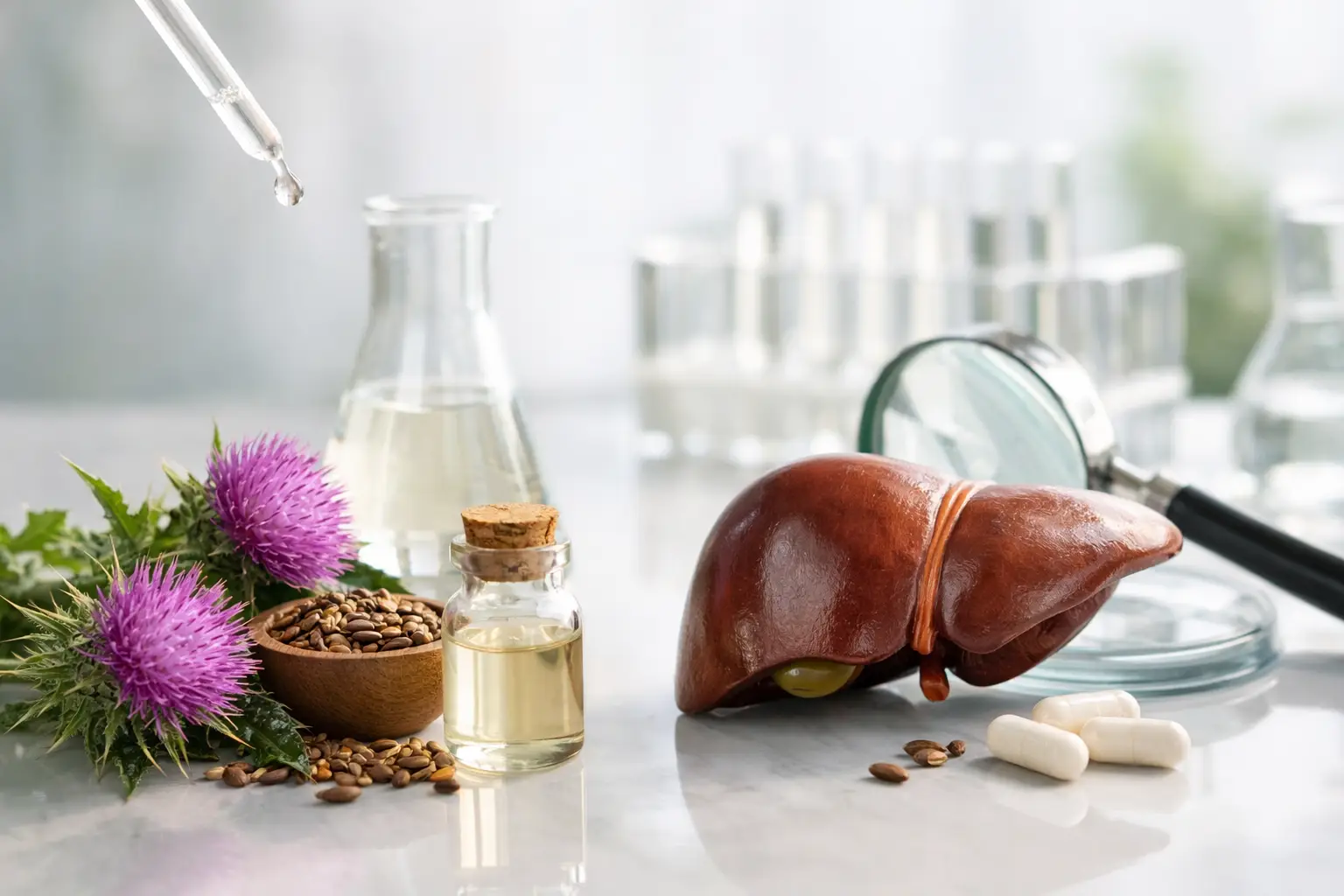
A mildly elevated liver enzyme result can make any promise of “liver support” sound appealing. But milk thistle liver support evidence deserves a more careful reading than a label can provide. This herb has a long history of use, a well-studied active complex, and some encouraging findings. It does not, however, replace diagnosis, treatment, or the daily conditions that allow the liver to recover.
For adults working on metabolic wellness, that distinction matters. The liver is closely involved in glucose regulation, fat metabolism, digestion, and processing substances we consume. Supporting those systems is rarely about one dramatic intervention. It is usually about restoring a steadier rhythm through meals, movement, sleep, alcohol awareness, appropriate medical care, and, when it fits, a thoughtfully chosen supplement.
What milk thistle is actually studied for
Milk thistle is the common name for Silybum marianum. Most research focuses on silymarin, a group of plant compounds extracted from its seeds. Silymarin includes silybin, which is often considered one of its most biologically active components.
In laboratory and animal research, these compounds show antioxidant and anti-inflammatory activity. They may help protect liver cells from certain forms of oxidative stress and influence pathways involved in inflammation and fat handling. Those mechanisms make the ingredient scientifically interesting. They are not, by themselves, proof that a supplement changes meaningful health outcomes in people.
Human studies have examined milk thistle in several contexts, including fatty liver disease, alcohol-related liver concerns, viral hepatitis, medication-related liver stress, and cirrhosis. This wide range is part of the challenge. A result from one patient group cannot automatically be carried over to another.
Milk thistle liver support evidence: what the research suggests
The fairest reading of the research is that milk thistle may modestly improve certain liver blood tests for some people, especially when enzymes such as ALT and AST are elevated. These enzymes can rise when liver cells are irritated or injured. In several clinical trials and research reviews, silymarin supplementation has been associated with reductions in these markers.
That finding is worth understanding in context. Lower enzyme levels can be encouraging, but they are not the same as proving that liver fat, scarring, symptoms, hospitalization risk, or long-term liver outcomes have improved. Enzymes naturally fluctuate. They can also respond to changes in body weight, alcohol intake, medications, illness, diet, and physical activity occurring alongside a supplement.
Research in metabolic dysfunction-associated steatotic liver disease, often called fatty liver disease, is particularly relevant to a metabolic-wellness audience. Some small studies suggest silymarin may support improvements in liver enzymes and, in certain cases, imaging or metabolic measures. Yet study designs vary widely. Participants may have different disease severity, take different doses, and use products with different silymarin concentrations. Many studies are also too short or too small to answer the questions that matter most.
For established cirrhosis, hepatitis, or significant alcohol-related liver disease, evidence is even less clear as a basis for self-treatment. Milk thistle has not been proven to reverse advanced liver damage or substitute for specialist-directed care. Anyone with jaundice, swelling, confusion, persistent right-sided abdominal discomfort, vomiting, dark urine, pale stools, or unexplained fatigue should seek medical evaluation rather than trying to solve the problem with a botanical.
Why the answer is not a simple yes or no
Supplement marketing often treats an ingredient as either “clinically proven” or useless. Real evidence is more disciplined than that. Milk thistle has plausible biology and a body of human research that supports continued interest. At the same time, the overall certainty is limited by uneven product quality, inconsistent dosing, short follow-up periods, and mixed study results.
The form matters, too. “Milk thistle” on a Supplement Facts panel does not tell you whether a product provides a standardized extract, how much silymarin it contains, or whether the dose resembles what was evaluated in research. Whole seed powder and standardized extract are not interchangeable. Neither are formulas that disclose their amounts and formulas that bury ingredients inside a proprietary blend.
This is why proof, not placeholders, is a useful standard. An ingredient can earn a measured role in a formula without earning a sweeping promise. At CoreVital, that means explaining milk thistle as a botanical intended to complement broader liver and metabolic wellness practices, not presenting it as a cleanse, detox, or cure.
What milk thistle cannot do
The language around “detox” often creates confusion. Your liver already performs detoxification functions continuously. A supplement does not take over that job or erase the effects of chronic heavy drinking, unmanaged diabetes, excess visceral fat, viral infection, medication injury, or environmental exposures.
Milk thistle also cannot make a risky pattern harmless. If alcohol is affecting your health, reducing or stopping intake and getting appropriate support matter more than adding an extract. If fatty liver disease is present, gradual weight loss when clinically appropriate, regular movement, improved glucose management, and a dietary pattern you can sustain have a much stronger foundation than any single supplement.
This is not a reason to dismiss botanicals. It is a reason to give them the right-sized role. The most useful supplement plan is one that works with the habits and care already moving your health in the right direction.
Safety and interactions deserve equal attention
Milk thistle is generally well tolerated in studies, but “natural” does not mean universally appropriate. Some people experience nausea, loose stools, bloating, or headache. Allergic reactions are possible, particularly for people sensitive to plants in the ragweed family, though individual reactions vary.
Because supplements can affect how the body processes medications, anyone taking prescription drugs should review milk thistle with a physician or pharmacist before starting it. This is especially sensible when managing diabetes, blood thinners, cancer therapies, seizure medications, or multiple medications at once. Pregnancy, breastfeeding, and active liver disease are also situations where professional guidance should come first.
Quality deserves practical attention. Choose products that clearly state the form and amount of milk thistle or silymarin, avoid vague blends, and are made under appropriate quality standards. Third-party testing can add confidence, but it does not turn a supplement into a treatment.
A steadier way to use the evidence
If you and your clinician decide milk thistle fits your routine, give it a clear purpose. Perhaps you are building a consistent metabolic wellness practice and want a transparent botanical formula as one part of that effort. Track the basics that matter: how you feel, digestive tolerance, adherence to your meals and movement plan, and any lab work your clinician has recommended.
Avoid changing five things at once. Starting several supplements, a restrictive diet, and an intense workout plan on the same Monday makes it difficult to know what is helping or causing side effects. Consistency is less exciting than a reset, but it provides better information and is usually easier to maintain.
The most honest takeaway is also the most useful: milk thistle may have a supportive role, particularly for liver enzyme patterns and metabolic contexts, but the evidence does not justify miracle language. Let it be one considered tool in a larger practice of protecting your liver - through ordinary meals, regular movement, restful nights, informed medical care, and choices you can repeat long after the initial motivation fades.