BURN INGREDIENT PROFILE
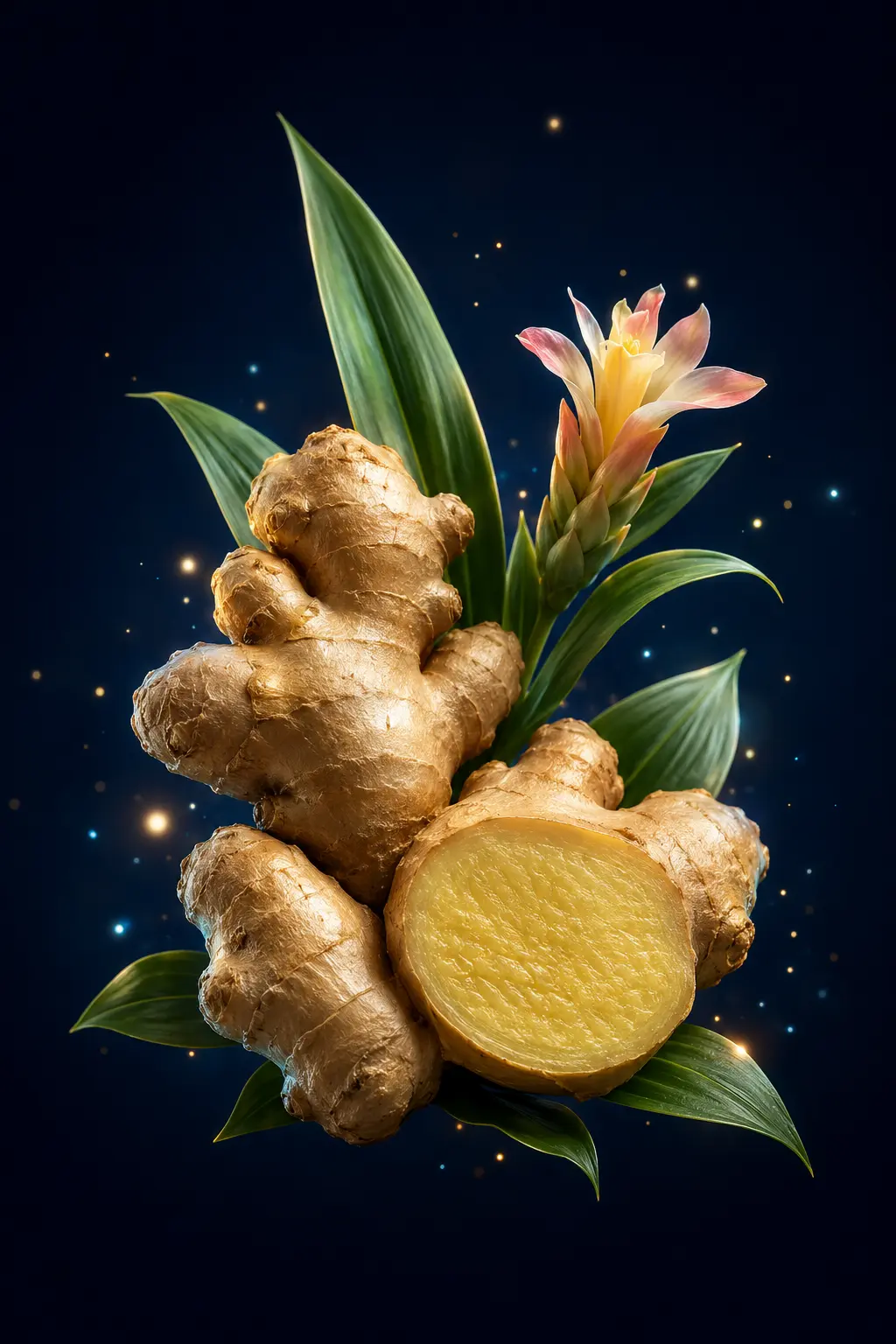
GingerZingiber officinale
DIGESTIVE TRADITION · HUMAN RESEARCH
Ginger’s rhizome has been used in food and traditional practice across Asia, Africa, and the Middle East, often in connection with digestion, warmth, and movement.
CCOCCO
SIGNATURE COMPOUND STUDIED6-GingerolC₁₇H₂₆O₄A pungent phenolic constituent frequently discussed in ginger research.
CONCEPTUAL MOLECULAR VISUALIZATION · FORMULA SHOWN EXACTLYThe scientific question
Ginger has been studied extensively for several forms of nausea and for other health uses. The evidence varies by outcome, preparation, and population; the strongest findings do not automatically establish every traditional claim.
02 · WHAT WE CAN RESPONSIBLY SAYSupport, not treatment
Ginger should not be presented as a treatment for metabolic disease or as proof that Burn will change body weight. Its role belongs within the complete formulation and daily routine.
03 · SAFETY MATTERSBring context to the label
Oral ginger can cause heartburn, abdominal discomfort, diarrhea, or irritation. People taking medicines should discuss herbal products with a healthcare professional.
THE FORMULA IS A SYSTEM
One ingredient is not
the whole story.
Return to the ingredient library, explore how Burn frames the complete ritual, or take the interactive assessment.
IS BURN FOR ME? →