
First, what is berberine?
Conversations about weight management often start with meals, movement, and daily habits. Berberine brings another question into that conversation: what can we learn from a plant compound being studied for its metabolic effects?
Berberine is a naturally occurring compound found in several plants, including barberry. Plants containing it have a long history of use in traditional medicine. Today, researchers are studying its effects on blood sugar, blood fats, and body weight.
Why the interest in metabolism?
Metabolism includes the processes your body uses to turn food into energy, use that energy, and store it. That is the connection that makes berberine interesting to researchers studying metabolic health and weight management.
Studies have reported different weight outcomes. Understanding the amount used, the preparation, and the length of a study helps put those findings in context.
A closer look at the research
The NIH’s National Center for Complementary and Integrative Health describes the weight-loss evidence as inconclusive. In the review it summarizes, weight effects appeared primarily with more than 1 gram daily for longer than eight weeks. Burn provides 500 mg of berberine HCl per daily serving as part of a five-botanical blend; those study results do not establish a weight-loss result for Burn.
Where CoreVital’s story begins.
Samir Bute brings his background in internal medicine to CoreVital. With his brother Ozzie, he built an approach that puts the formula and the daily routine in the same conversation.
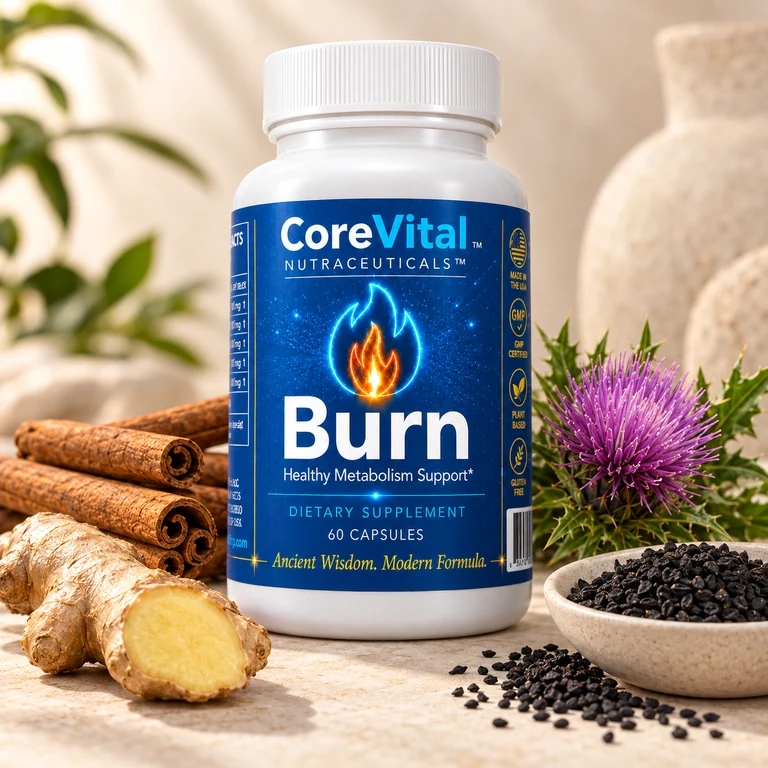
Burn brings berberine HCl together with milk thistle, Ceylon cinnamon, black cumin seed, and ginger. Alongside the bottle comes 30 days of Wellness Circle guidance, connecting movement, diet, stress, sleep, and spirituality to practical daily habits.
Get to know the ingredient.
Know what comes with the bottle.